
When It’s Time to Add Warehousing to Your Supply Chain (And When It Isn’t)
Warehousing gets pitched as a solution to almost every supply chain problem — inventory too tight, delivery windows too unpredictable, seasonal demand too spiky. Sometimes that’s true. Sometimes what a business actually needs is a better shipping schedule, not a lease on square footage. Here’s how to tell the difference.
The Real Signal Is Variability, Not Volume
A business shipping a high, steady volume of freight often doesn’t need warehousing at all — a consistent schedule with a reliable carrier solves that. Warehousing earns its cost when variability is the problem: demand that spikes seasonally, customers who need faster regional delivery than a single central location can support, or production schedules that don’t line up neatly with shipping schedules. If the issue is timing mismatch rather than raw volume, storage — even short-term — is usually the more efficient fix.
Cross-Docking Solves a Different Problem Than Storage Does
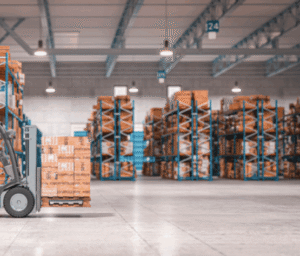
These two get lumped together, but they answer different questions. Storage answers “where does this sit until it’s needed?” Cross-docking answers “how do we move this from an inbound truck to an outbound truck with as little dwell time as possible?” A distribution strategy that treats every warehouse stop as long-term storage is usually paying for space it doesn’t need. Freight that’s already sold and just needs to be re-sorted by destination is a cross-docking problem, not a storage problem — and it should be priced and handled differently.
Regional Staging Changes Your Delivery Map More Than Your Fleet Does
One of the most underused warehousing moves is using a regional staging point to shorten last-mile distances, rather than trying to solve delivery speed with a bigger or faster fleet. A single truckload delivered to a regional warehouse can be broken into a dozen shorter local deliveries from there — turning a two-day delivery zone into a next-day one, often without adding a single truck to the roster.
Pick-and-Pack Only Pays Off Past a Certain Order Complexity
If outbound orders are simple — full pallets, single SKUs, predictable quantities — pick-and-pack fulfillment adds cost without adding much value. It starts paying for itself once orders get complex: mixed SKUs, variable quantities, or direct-to-customer shipments that need individual packing and labeling. Knowing which side of that line your order profile sits on is usually the deciding factor in whether fulfillment services are worth adding.
The Question Worth Asking Before Signing a Contract
Not “do we need more space,” but “where in the process is freight actually waiting around, and why.” Sometimes that answer points to a warehouse. Just as often, it points to a shipping schedule that needs to be rebuilt first.
Ward Line Logistics runs cross-docking, staging, and pick-and-pack fulfillment out of our Altoona distribution floor. If you’re not sure whether your bottleneck is a storage problem or a scheduling problem, that’s exactly the kind of question our dispatch desk is used to working through.
